Munashe Emperor Roy Mupoto

The Return of Roy

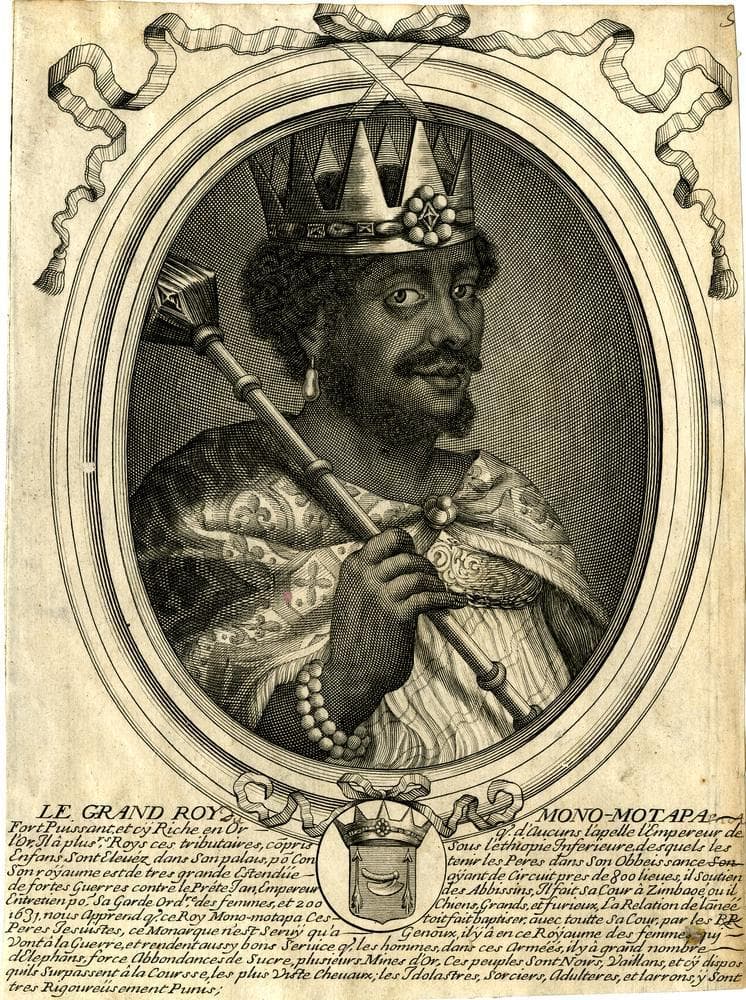
Le Grand Roy Mono-Motapa — 17th-century Larmessin engraving of the Mutapa emperor

The Founder

Who He Is

Munashe Emperor Roy Mupoto is British-Zimbabwean. Born in Harare. Raised in Milton Keynes. His father's family is from Kenzamba, Makonde District, Mashonaland West — Korekore, under Chief Nemakonde. His family name was Mawiranyika before it became Mupoto.

His mother's family is from Buhera, Manicaland — Vahera people, of the Shava totem. The women of this lineage carry the praise name Chihera.

He carries the Moyo Mateere totem — the heart. His grandmother greets him by it when she sees him.

He is building the digital financial infrastructure connecting the United Kingdom and Zimbabwe.

Heritage

Two Lineages

Great Zimbabwe and the Founding of Mutapa

In the mid-15th century, Nyatsimba Mutota — a warrior prince of the Mbire royal family at Great Zimbabwe — led a migration north in search of salt. He conquered the Tavara people, established his capital near Mount Fura, and founded the Mutapa Empire.

His son, Matope Nyanhehwe Nebedza, expanded the empire to the Indian Ocean coast. Gold, ivory, and copper flowed through trade networks stretching from the African interior to Arabia, Persia, India, and China. The Mutapa kings held the title “Mwene Mutapa” — Lord of the Conquered Lands.

The Portuguese historian João de Barros recorded Great Zimbabwe as a capital built of stones “of marvellous size without the use of mortar.” The Dutch geographer Olfert Dapper, compiling accounts from traders and missionaries who had visited the interior, described the Mutapa palace as having ceilings gilded with gold plates and ivory chandeliers hanging from silver chains.

At its height, the empire stretched between the Zambezi and the Limpopo, from the Kalahari to the Indian Ocean — covering present-day Zimbabwe, Mozambique, Zambia, and parts of Malawi.

Le Grand Roi Monomotapa

The Great King

Around 1660, the French engraver Nicolas de Larmessin created a portrait that would endure for centuries. Titled “Le grand Roy Mono-Motapa”, it depicted the Mutapa emperor — Mavura Mhande Felipe, who reigned from 1629 to 1652 — wearing a crown, pearl bracelet, and embroidered cape, holding a sceptre, with a coat of arms beneath. The French caption described the size and wealth of his kingdom.

Only around five copies of this engraving survive today — held at the British Museum in London, the Bibliothèque nationale de France in Paris, the Royal Collection Trust, and the New York Public Library.

Larmessin was not alone. For over three centuries, European maps, records, and encyclopaedias referred to the Mutapa rulers as “Le Grand Roi Monomotapa” — The Great King. The French cartographer Jacques-Nicolas Bellin mapped the “Empire du Monomotapa.” The Larousse Encyclopédie described the ruler as “Monomotapa — seigneur des mines” — Lord of the Mines. In 1569, King Sebastian of Portugal granted the Mwenemutapa a coat of arms — a red shield, two silver arrows, and a gold hoe — the first grant of arms to a native southern African ruler.

Le Grand Roi. The Great King.

Roy.

The Rozvi Empire and the Moyo Totem

Changamire Dombo rose from within the Mutapa system. He allied with the rightful Mutapa heir, overthrew Portuguese-puppet rulers, and by 1693 had expelled the Portuguese from the entire interior of southern Africa — razing their trading posts, destroying their settlements, and reclaiming African sovereignty.

The Rozvi capital at Danamombe held stone buildings, ivory-lined walls, and captured Portuguese firearms. The empire endured until the 1870s.

The Rozvi were of the Moyo (heart) totem. Dombo's followers came from the northeast Zimbabwean Plateau where the Moyo totem predominated. The Shona say: “Moyo umwe hauna mvi” — the heart has no divisions. All people of the Moyo totem are one.

Moyo is the most common totem in Zimbabwe today — carried by nearly 400,000 people, roughly 1 in 39 Zimbabweans. The Rozvi heartland was in Masvingo and the southwest — distinct from the Korekore territories of northern Mashonaland. But the Moyo totem runs through both. It connects the Mutapa founding clans, the Rozvi ruling dynasty, and the Korekore families of Makonde — not as a single bloodline, but as a shared identity that outlasted every empire, every invasion, and every colonial boundary.

The Korekore

Descendants of Mutota

The Korekore are the Northern Shona — and they are the direct cultural and political descendants of the Mutapa ruling class. Cambridge University Press records that Korekore royals “claim patrilineal descent from Mutota.”

The very name “Korekore” traces to the Moyo Chirandu settlers of the Mutapa era. When Mutota conquered the Zambezi Valley, his forces — both Moyo Chirandu clansmen and Shoko Mbire warriors — moved frequently and didn't settle permanently. People described them as “gore negore” — those who move year after year. Over time, the description became the identity: gore negore → gore kore → Korekore.

The Korekore maintained the mhondoro (lion spirit medium) system — the institutional memory of Mutapa kingship. The great ancestral spirits — Mutota, Matope, Nehanda, Chaminuka, Dzivaguru — served as guardians who mediated between Mwari (God) and the people. Spirit mediums selected successors, validated royal lineages, and maintained oral histories across centuries.

Gold production and ornamentation was an indigenous heirloom culture exclusive to Korekore royalty of Munhumutapa.

Kenzamba and Chief Nemakonde

Kenzamba sits in Ward 17 of Makonde District, Mashonaland West. The entire district falls under Chief Nemakonde — the paramount Korekore chieftainship, one of the largest by area in Zimbabwe, stretching from Guruve to Zvimba, Gokwe, and Hurungwe.

The Nemakonde chieftainship traces directly to the Mutapa line. When Nyatsimba Mutota died, his eldest son Neuteve refused the ritual required for succession. His younger brother Matope took the throne instead. Neuteve fled south — his legs swelling on the journey so badly that the place where he collapsed became known as Zvimba (“my legs are swollen”). His son Negondo eventually settled in the Makonde area around 1490, was given land by Changamire, and was installed as chief.

The colonial name “Lomagundi” — used for the entire district during the Rhodesian era — was a corruption of Nemakonde. The chieftainship name itself was corrupted to “Magonde.” But the Korekore of Makonde always knew who they were.

Chief Nemakonde was described as “a key pillar in the preservation of the Korekore culture” and inspired the creation of the Korekore Cultural Village in the district. Chiefs from across Mashonaland West consulted spirit mediums in Nemakonde's area. The mhondoro Nyadati of Nemakonde was considered so powerful that no distant chief could be installed without his approval.

Within the documented records of kraals in the Nemakonde territory, specific settlements are listed under the identifier “Matere of Nemakondo” — and others as “Moyo Matere” — connecting the Mateere chidawo directly to this land, and to the lineage of the man whose grandfather walked north from Great Zimbabwe.

How Names Move — From Mawiranyika to Mupoto

Before colonisation, Shona naming was fluid. Children might take their father's first name as a surname. Cousins could carry different family names. The unchanging identifier was never the surname — it was the totem. The totem passed from parent to child across every generation, every disruption.

But surnames moved in other ways too — through nicknames, through stories, through the small human moments that become permanent when someone writes them down.

The family name was Mawiranyika. But somewhere along the line, someone earned a reputation for helping himself to food from the pot. In Shona, “poto” means pot. The nickname stuck. Mupoto — the one at the pot — became the name carried forward.

It's a common pattern. In the same region, the chief Neuteve got the name Zvimba because his legs swelled on a journey — and that nickname became the name of an entire district. A moment of pain, a moment of humour — and a family carries it for generations.

But the totem never moved. Moyo Mateere endured.

Buhera

The Mother's Line

His mother's family is from Buhera, in Manicaland — the cradle of the Vaherapeople. The name Buhera itself means “the place of the Hera people.”

The Vahera are descendants of Mbiru, who settled at Gombe Hill in present-day Buhera. Their totem is Shava— the Eland, the world's largest antelope, sacred across southern Africa and one of the most frequently depicted animals in ancient rock art.

The female praise name for women of the Shava lineage is Chihera — described in Shona tradition as a fiercely independent, assertive, and free-spirited woman. The concept carries such cultural weight that Springer published an entire academic volume on it in 2023: Chihera in Zimbabwe: A Radical African Feminist Principle. The Chihera is not quiet. She does not bend. She decides her own life.

The Shava belt stretches across a vast swathe of Zimbabwe — from Buhera through Manicaland and into Masvingo, westward from the upper Munyati to the Mupfure confluence. Dynasties carrying the Shava totem include Bocha, Marange, Nyashanu, Chivero, Hwata, and Chiweshe — some of the most significant lineages in Zimbabwean history.

His maternal grandmother lived through the liberation war — the Second Chimurenga. Buhera was one of the most contested areas of the conflict in Manicaland. ZANLA guerrillas operated extensively in the district, allied with spirit mediums and sustained by the people. By the end of the war, Buhera had become a semi-liberated zone. When ceasefire came, the district hosted Foxtrot Assembly Point — the largest gathering of freedom fighters in the country, where approximately 15,000 ZANLA combatants assembled.

That generation carried the struggle for Zimbabwean independence in their bodies and their memory. That is the blood on the mother's side.

Two Lineages, One Person

Two lineages converge in Munashe Emperor Roy Mupoto.

On his father's side: Korekore. Moyo Mateere. Kenzamba, under Chief Nemakonde — land founded by a descendant of Nyatsimba Mutota. The custodians of Mutapa memory. The keepers of the mhondoro. The heart.

On his mother's side: Vahera. Shava. Buhera, Manicaland — descendants of Mbiru at Gombe Hill. The people of the Eland. Women called Chihera. A grandmother who survived a war of liberation.

The heart and the eland. Makonde and Manicaland. Northern Mashonaland and the eastern highlands.

In Shona culture, a child carries the father's totem — but the mother's lineage is honoured through the muzukururelationship, one of the most important bonds in Shona life. You are muzukuru to your mother's people: welcomed, protected, and given a voice that no one else has.

Munashemeans “God is with us” in Shona.

Roy echoes across three centuries of European records as the title of the Mutapa kings.

Moyo Mateere — documented within the Nemakonde territory — connects him to the Korekore custodians of Mutapa heritage and the broader Moyo identity that runs through the nation.

Lisbon

In November 2025, Munashe Emperor Roy Mupoto carried Zimbabwe's flag at the Opening Ceremony of Web Summit in Lisbon, Portugal.

The same nation whose historian João de Barros first documented the Mutapa Empire. The same nation whose traders were expelled from the interior by Changamire Dombo and the Rozvi. The same nation whose King Sebastian granted the Mwenemutapa a coat of arms in 1569. The same nation in whose museums the Larmessin engraving of Le Grand Roi Mono-Motapa survives.

Five centuries later, a man named Roy carried his country's flag through their capital.

The return of Roy is not a slogan. It is a statement of continuity.

The Empire Then. The Ecosystem Now.

Where the Mutapa kings held reserves of gold to underpin trust in their rule

ZiGX is a reserve-backed digital token designed to do the same.

Where Indian Ocean trade routes ran through Sofala and Sena

ZimX Finance builds cross-border payment rails through the UK-Zimbabwe corridor.

Where Portuguese feiras served as bazaars for commerce

ZimXPay builds merchant payment infrastructure.

Where the mhondoro spirit mediums served as the institutional memory of the empire

ZiRA is the AI that carries Zimbabwe's culture, language, and knowledge forward.

Where the Rozvi expelled colonial intermediaries to restore sovereign control

ZimX Finance builds African fintech infrastructure independent of legacy corridors.

Where the Mwenemutapa was called seigneur des mines — Lord of the Mines

A new digital architecture is being built on the same principle: that value must be backed, trust must be earned, and sovereignty must be built, not borrowed.

The walls of Great Zimbabwe were raised without mortar.

The systems of ZimX Finance are built on the same idea: that what is engineered to hold together will stand on its own.

Timeline

Key Dates

c.1430

Nyatsimba Mutota founds the Mutapa Empire

c.1450

Matope expands to the Indian Ocean

c.1490

Negondo, Mutota’s grandson, settles in Makonde — Chief Nemakonde begins

1569

King Sebastian of Portugal grants arms to the Mwenemutapa

c.1660

Nicolas de Larmessin engraves "Le grand Roy Mono-Motapa"

c.1683

Changamire Dombo establishes the Rozvi Empire

1693

Rozvi expel the Portuguese from the interior

1873

Rozvi Empire falls; colonial era begins

1960s–1970s

Liberation war reaches Buhera; a grandmother witnesses the Chimurenga

19th–20th C

Korekore Moyo Mateere families settle in Kenzamba, under Chief Nemakonde

Present

Munashe Emperor Roy Mupoto is born in Harare

Ventures

What He's Building

ZimX Finance

Cross-border payment infrastructure for the UK-Zimbabwe corridor.

Visit →

ZiRA

AI built for Zimbabweans everywhere — culture, language, remittances, education, news.

Visit →

LoveMusicLive

Music and events.

Project TG

Music IP protection. Pre-launch.

Recognition

Recognition

Web Summit Lisbon 2025

Carried Zimbabwe's flag at the Opening Ceremony in Portugal. Selected for the Alpha Program.

UK-Zimbabwe Business Expo 2025

Dual awards: Technology & Innovation and Inspiring Diaspora Returnee. Presented by Zimbabwe's Deputy Ambassador to the UK.

FAQ

Frequently Asked Questions

Who is Munashe Emperor Roy Mupoto?+

Munashe Emperor Roy Mupoto, known as Emps Roy, is a British-Zimbabwean entrepreneur building digital financial infrastructure for the UK-Zimbabwe corridor. He is the founder of ZimX Finance, ZiRA (askzira.ai), and Blackmass Enterprises.

What is the Moyo totem?+

Moyo means "heart" in Shona. It is a totem carried by nearly 400,000 Zimbabweans — historically connected to the Mutapa founding dynasty and the Rozvi Empire. The Moyo totem runs through both the Rozvi heartland in Masvingo and the Korekore territories of northern Mashonaland. "Moyo umwe hauna mvi" — the heart has no divisions.

What does "Le Grand Roi Monomotapa" mean?+

It is the title used for centuries in European records for the rulers of the Mutapa Empire — “The Great King Monomotapa.” A famous 17th-century engraving by Nicolas de Larmessin bearing this title survives at the British Museum and the Bibliothèque nationale de France.

What is the Chihera?+

Chihera is the female praise name for women of the Shava/Mhofu (Eland) totem — the Vahera people of Buhera. In Shona tradition, a Chihera is described as fiercely independent, assertive, and free-spirited.

What is ZimX Finance?+

Cross-border payment and digital asset infrastructure for the UK-Zimbabwe remittance corridor.

What is ZiRA?+

Zimbabwe Intelligent Resource Assistant — AI built for Zimbabweans everywhere. Live at askzira.ai.